Legal Intake Management Is Not Just Contract Intake: What Your Legal Front Door Is Missing
7 min read



Search for "legal intake management," and most results focus on extracting key information from your contracts. They cover review requests, approval workflows, signature routing, and clause negotiation. The vendors defining that intake management are CLM companies, and their version of legal intake starts and ends with the one category their product was built for.
However, contracts are a fraction of the legal intake use cases a corporate legal team actually handles. A business unit needs a legal notice drafted for a recovery proceeding; HR wants advisory before acting on a sensitive termination; a regulator sends a communication that requires a reviewed response by Friday; the product team needs clearance before a launch already on the marketing calendar. None of these are contracts, and none of them have a front door in a contract-centric intake system: no SLA, no tracking, no reporting.
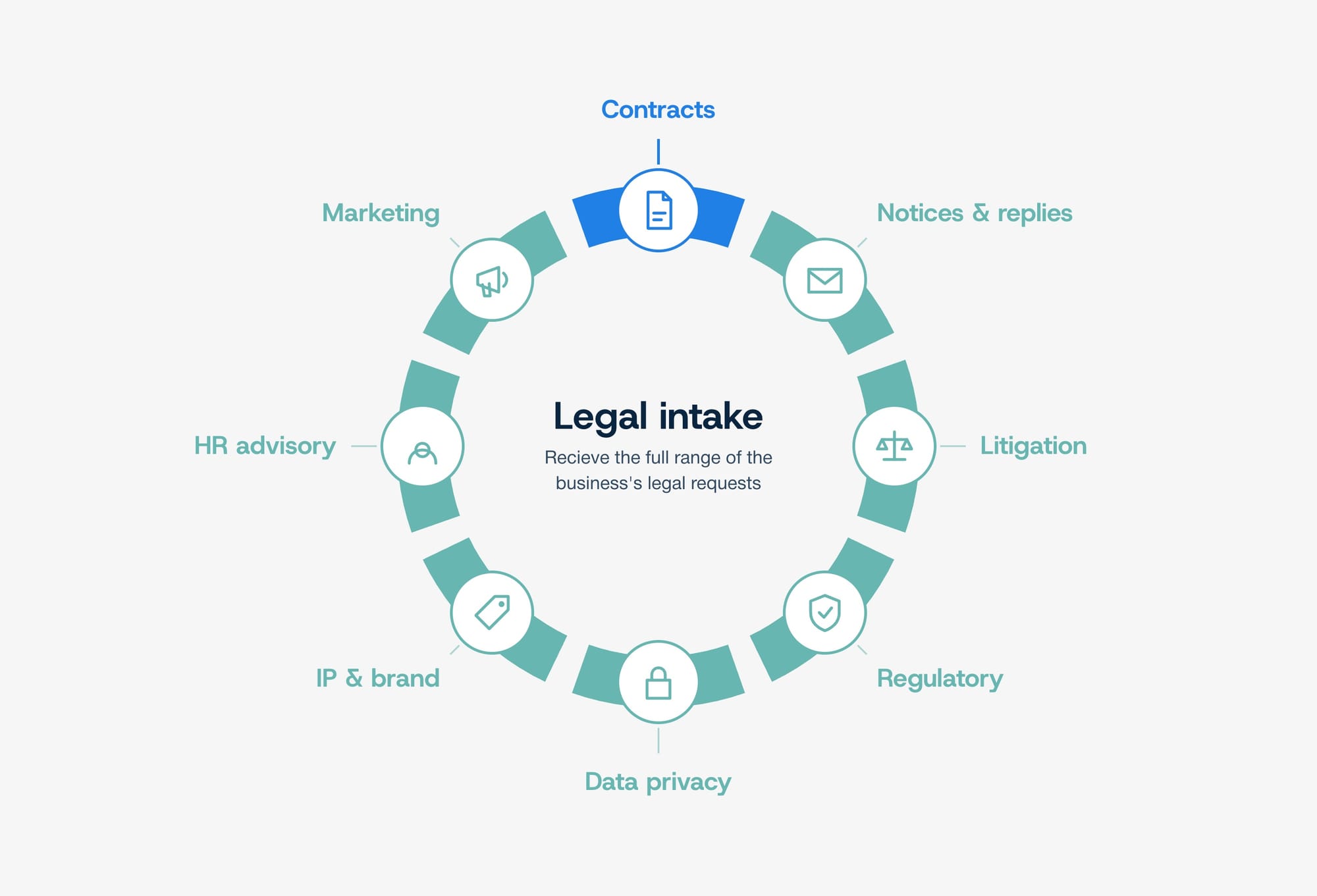
Consider what actually reaches an in-house legal team in a typical week. Marketing sends a campaign for advertising clearance; a product team wants a new initiative reviewed before launch; someone in the data privacy function flags a query that is urgent to address; a regulator sends a communication that needs a response; a customer dispute escalates; a policy needs reviewing; a brand or IP matter surfaces.
None of these are contracts, and each is legal work. A contract-only intake system captures none of them. The categories a full legal intake process must handle stretch well beyond agreements:
The deeper problem with a contract-shaped intake is not only that it misses categories. It assumes all legal work behaves like a contract, when it is anything but.
A contract request follows a familiar rhythm. A document arrives, is reviewed or drafted, is negotiated and approved, and is executed. A system built around that rhythm, with its templates, its clause libraries, its approval routing, and its signature step, fits contract work well and fits almost nothing else.
Now look at the requests that dominate a great many in-house teams, and that are especially prominent across India and the wider region. A business unit asks legal to draft a legal notice to recover an overdue payment or warn a counterparty about a breach. A dispute hardens, and someone asks whether to initiate or defend legal action. Each is core legal work, and neither resembles a contract.
More importantly, they do not resemble each other either. A request to draft a legal notice, or to reply to one, produces a formal document under a hard and often statutory deadline, where a single day lost can forfeit a position. A litigation action request may need to move immediately to external counsel and may carry the highest risk in the department's entire portfolio.
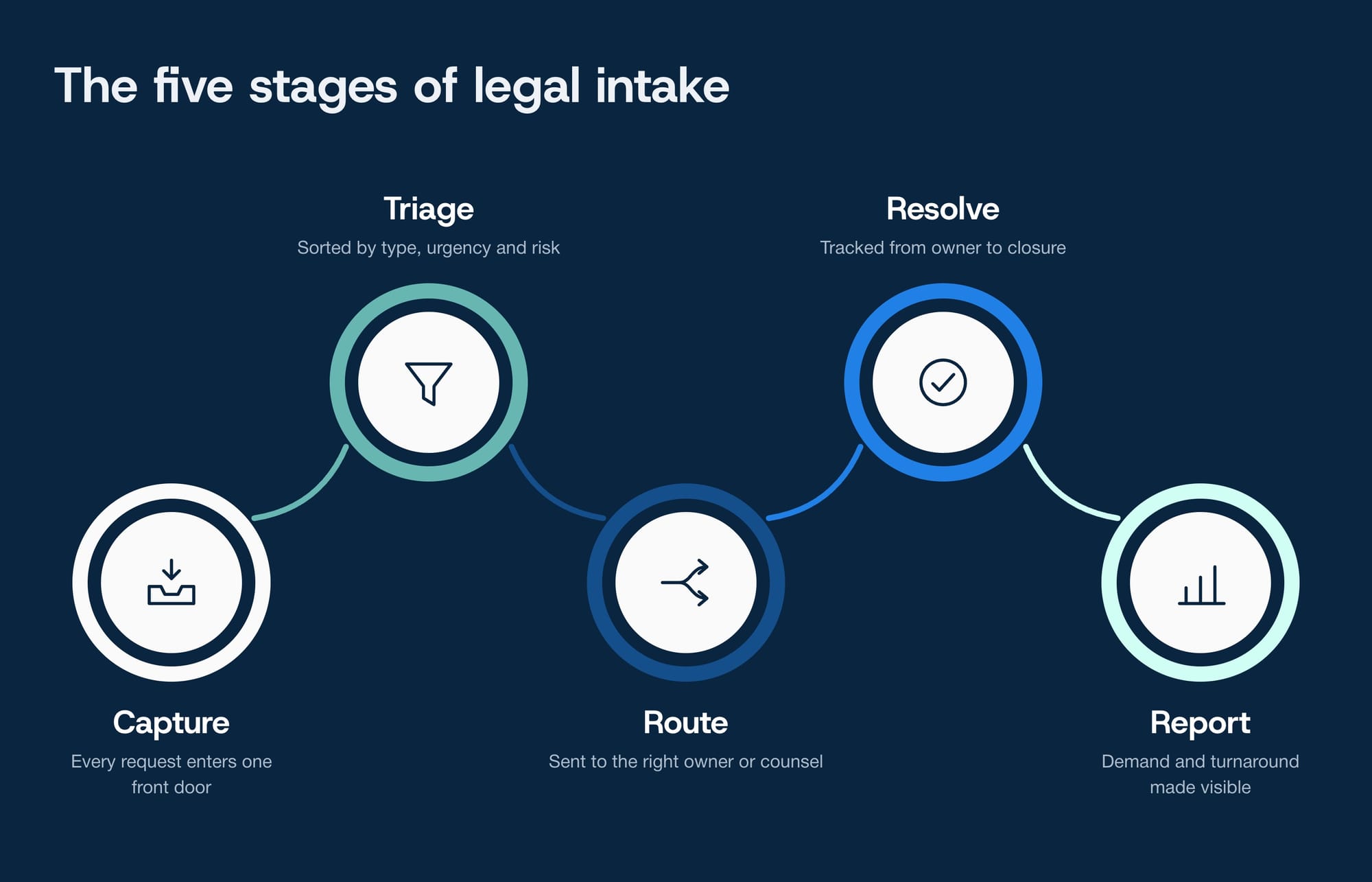
These requests differ in what they produce, who should own them, how fast they must move, and how much is at stake when they slip. A pipeline designed for the single shape of a contract cannot triage, prioritize, or route them correctly, because it was never built to recognize that they are different kinds of work in the first place. Stretching a contract tool to cover a notice reply does not make it fit. It simply hides the mismatch until you miss a deadline.
If you are evaluating legal intake tools, three questions will tell you whether the platform was built for your entire legal function or just for your contract workflow.
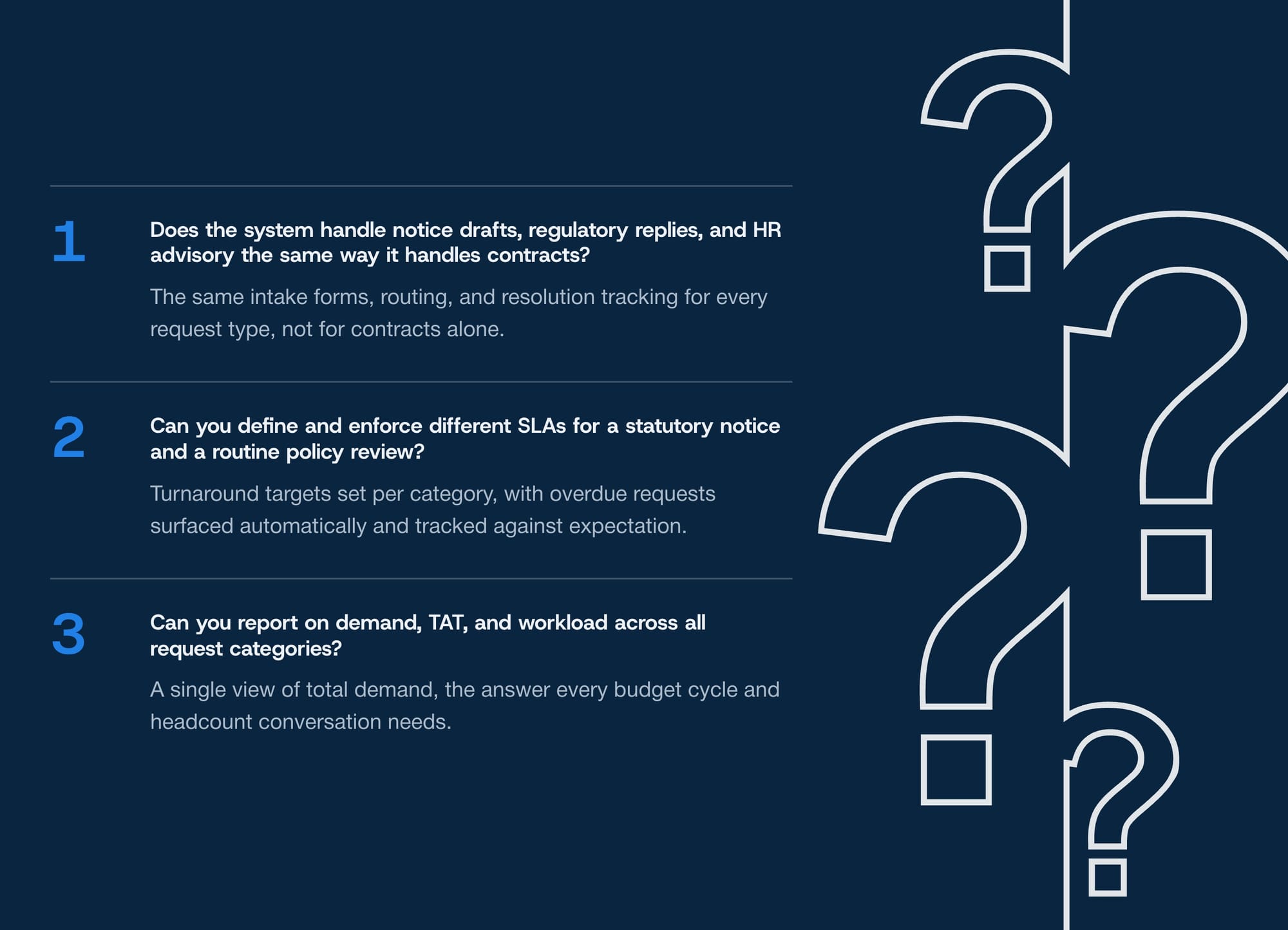
If the vendor's demo walks you through a contract review request and stops there, ask what happens when someone submits a request for a legal notice draft, or when HR sends an employment advisory query, or when the product team needs regulatory clearance before a launch. The intake tool should handle all of these with the same structural rigor: forms that capture the right fields, routing that sends the request to the right owner, and tracking that follows it to resolution.
Priority levels are the minimum. The standard worth insisting on is measurable turnaround targets defined per category, with automatic surfacing of overdue items and reporting dashboards that show actual versus expected TAT. A notice draft with a statutory deadline and a routine policy review should not share the same turnaround expectation. If the platform cannot differentiate, breadth of request type is academic.
If the reporting only covers contracts, you still cannot answer the question that comes up in every budget cycle and headcount conversation: how much demand legal actually handles, how long each request type takes, and where capacity falls short.
For the full framework on what a legal intake system should include, the six core components, the maturity curve, and the twelve-item evaluation checklist, see Legal Intake Management: The In-House Guide to Building a Legal Front Door.

The market's quiet conflation of legal intake with contract intake has real consequences for the teams buying these tools. If your intake system is scoped to contracts, the notice drafts, the regulatory replies, and the rest of your legal team's operational workload stays unmeasured, untracked, and invisible when it matters most. The fix is not just a wider funnel. It is a wider funnel with SLA discipline for every request type that passes through it, and reporting that covers the full picture of legal demand rather than one slice.
Provakil's Enterprise Legal Intake Management delivers exactly that: the full thirteen use cases, turnaround targets across each, and native platform integration that feeds every request type into the downstream workflow, whether that is AI CLM software for contracts or litigation management software for disputes.

Even contract-heavy teams field regulatory queries, HR advisory, IP requests, and business clearances. The issue isn't volume; it's visibility. If those requests bypass intake, you cannot measure their TAT, report on workload, or prove capacity at budget time.
Rarely well. CLM intake forms capture contract metadata: counterparty, type, value, expiration. A regulatory query or HR advisory doesn't include those fields. Forcing non-contract requests through contract-shaped forms produces incomplete data and unusable reporting.
Start with the two or three highest-volume non-contract categories, build forms that ask only what is relevant to each, and show requesters they get status updates without chasing legal by email. Adoption follows convenience.
Audit your email and messaging channels for one month to identify the non-contract request types arriving outside the system. That data tells you which categories to add first and what turnaround targets to set for each.

Dive deep into Provakil's numerous blog posts & discover how legal tech can streamline your litigation, contracts, IP, and notice management processes.