The Basics of E-signing for Lawyers
4 min read



The popularity of e-signatures is growing immensely; global e-signature volume has risen from 89 million to 754 million in five years. The e-signing market is expected to reach $12,721.5 Million by 2030, growing at a CAGR of 26.6%
E-signing solutions are gaining popularity because they make legal interactions and documentation easier and more efficient. For lawyers adapting to the new technological requirements for remote access and legal authorization, this article covers the basics of e-signing solutions.
Especially during the COVID-19 pandemic, remote access to legal proceedings has become more widely employed. The use of technology has many benefits, and e-signatures are one of them. Understanding the convenience of legal technology is one step toward improved client relations and business efficiency for law firms.
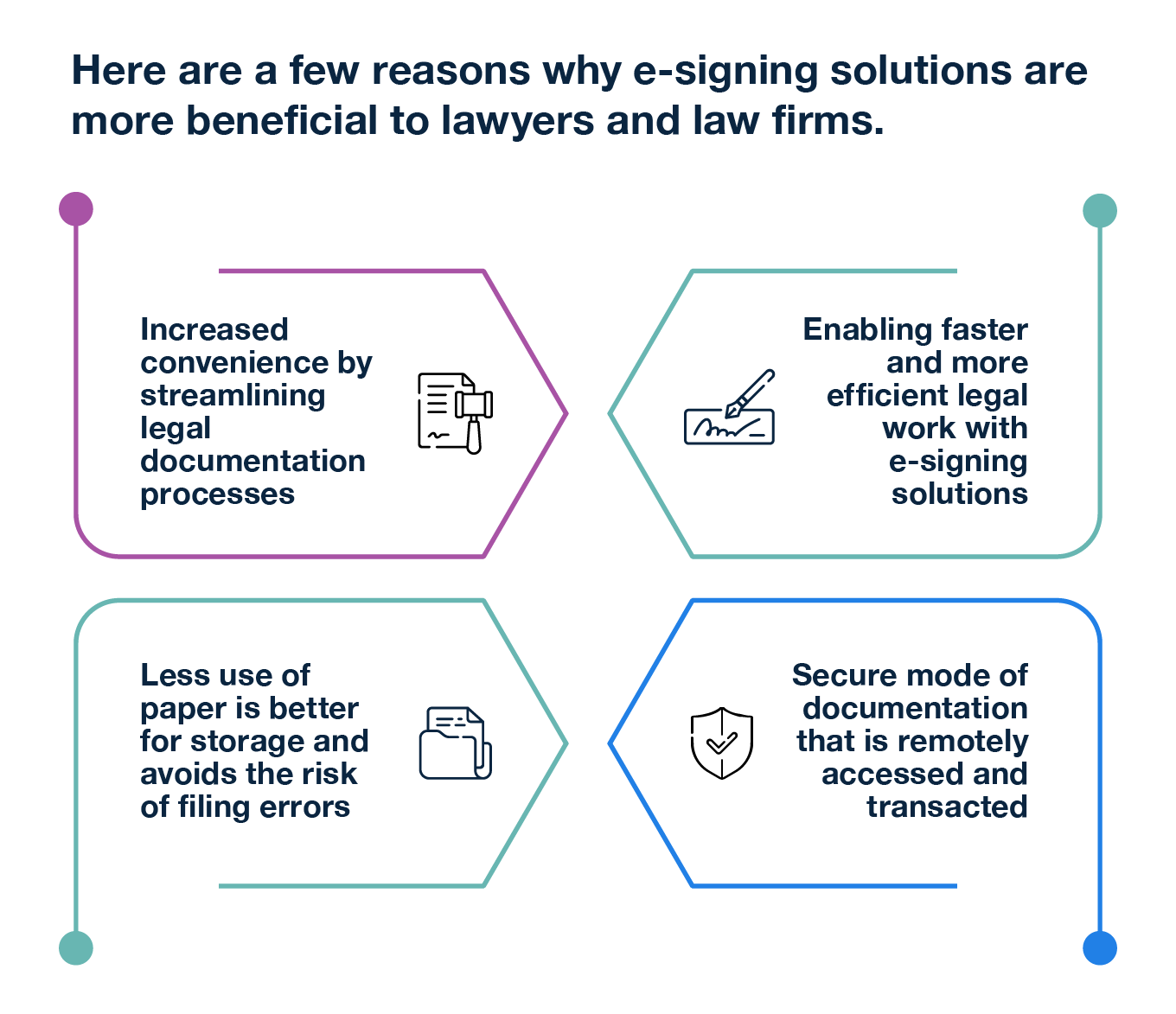
Here are a few reasons why e-signing solutions are more beneficial to lawyers and law firms.
Owing to the increased use of e-signatures, it is necessary to stay informed of the best practices. The correct, viable, and reliable e-signing solution is imperative in making the right decision. Legal proceedings are matters that require the utmost attention and responsibility. Most legal proceedings initially involved a lot of paperwork. U.S. businesses waste just $8 billion a year on managing paper. With the widespread use of e-signatures, the environmental impacts are far less severe.
With cloud-based computing, virtual law firms have become possible, probable, and profitable. Having to work remotely has enriched work-life balance in numerous ways. Clients and lawyers rely on virtual platforms for official proceedings. Even legal documentation is processed over cloud computing in virtual law firms. The need to work remotely has introduced new forms of contract lifecycle management and record management. E-signatures for official documents and legal procedures have become a common practice among lawyers. Companies that use e-signatures are known to drastically reduce paper management and expenses by a whopping 85%. Secure access to technology has given e-signatures unique value, changing legal authorization processes.
Software developments have led to smart, secure, and innovative e-signing solutions for lawyers. Legal documentation can be processed remotely, and client interactions are made more efficient with e-signing solutions. Not just law firms and legal proceedings, but also financial operations, policy proposals, and business documentation rely on e-signing solutions.
Especially in contract lifecycle management, e-signing solutions should be legally recognized and considered a valuable asset. By reducing the risk of fraud and creating a secure gateway for information, e-signing solutions are developed with the latest technology. By developing SaaS secure products and software platforms for legal teams, Provakil integrates artificial intelligence and machine learning with advanced technology for smart and secure legal proceedings.
Provakil is here to assist you with the implications of e-signature legality.
With developments in legal e-signing solutions, it is essential for lawyers and clients to agree on the legal status of e-signing solutions and contract lifecycle management. The following pointers are required for e-signatures to be valid.
In addition to improving interaction between client and lawyer, the e-signing solution aims to enhance efficiency and streamline legal proceedings. What could take days or weeks is now completed in moments?
The technological advancements in e-signing solutions have enabled law firms to secure a platform to interact with clients and fulfill each contract's life cycle legal obligations. Management of legal assets and documentation has become more efficient.
41% of all companies require signatures on more than half of all documents. When e-signatures can take over this market, the road to a sustainable future with technology is nearer. Our technological prowess at Provakil allows us to advise legal teams on best practices and indicators for efficient contract lifecycle management. Click here to consult a software specialist for your enterprise solutions.

Dive deep into Provakil's numerous blog posts & discover how legal tech can streamline your litigation, contracts, IP, and notice management processes.