The AI CLM Handbook 2026: A Practical Guide to AI-Powered Contract Management
6 min read



Every legal team eventually hits the same wall: more contracts than people to review them, and no good way to know which ones carry real risk until something goes wrong. That's the problem an AI CLM Handbook is meant to solve. AI-powered Contract Lifecycle Management Software combines automated drafting, clause-level risk detection, and a structured repository with machine learning that reads contracts the way an experienced reviewer would, only faster and across thousands of documents at once.
Traditional contract management software gave teams a digital filing cabinet with workflow rules attached. AI Contract Lifecycle Management Software goes further; it reads the contract itself, flags clauses that deviate from your standard terms, predicts when a renewal is approaching, and surfaces obligations buried in paragraphs of a multi-page agreement before anyone has to go looking for them.
The distinction matters because most teams already have some form of contract storage. What they're missing is the layer that turns stored documents into usable intelligence. That's the gap AI CLM software closes, and it's also the starting point for understanding what Provakil's CLM platform is built to do.
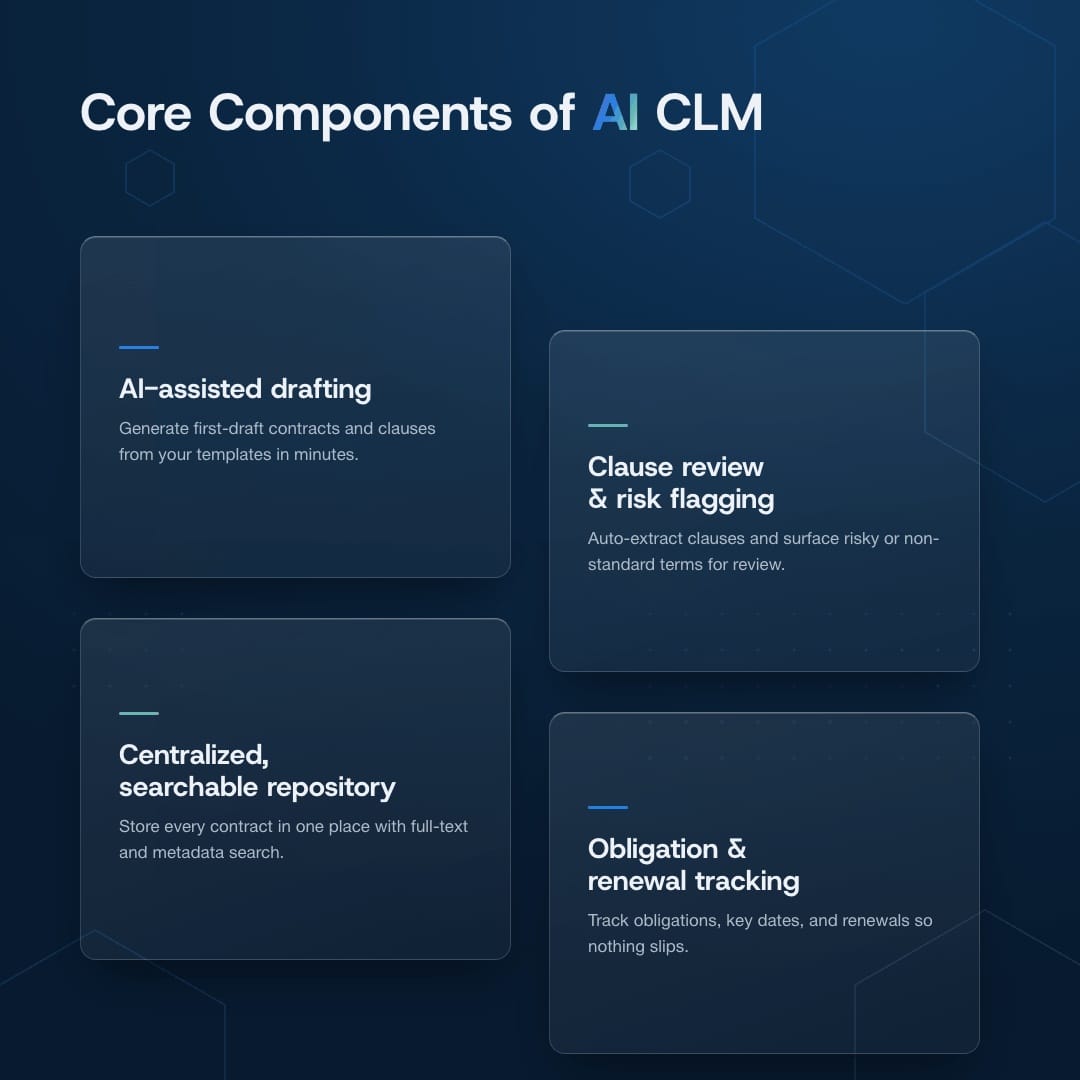
Strip away the marketing language, and an AI-powered CLM system has four core parts:
A well-built AI CLM Handbook does more than describe what the software does. It maps the specific failure points behind contract risk, outdated clause language, missed obligations, inconsistent terms across agreements with the same counterparty, and shows how AI addresses each directly.
AI CLM software reduces these by comparing every new contract against an approved playbook in real time, extracting obligations the moment a contract is signed, and maintaining a single source of truth instead of scattered folders and inboxes. Provakil's Handbook works through these scenarios in detail, mapping each one against the platform's clause intelligence.
The shape of a good evaluation is simple: not whether a vendor says "AI," but whether clause intelligence, ERP integration, implementation support, and data handling hold up against your contract volume and regulatory environment, including India's DPDP Act, for any contract that touches personal data.
A credible AI CLM Handbook addresses all of this in specific terms rather than a generic checklist, and Provakil's does exactly that, giving legal and procurement one reference instead of a dozen vendor pages.
Even a well-planned rollout runs into friction worth naming upfront.
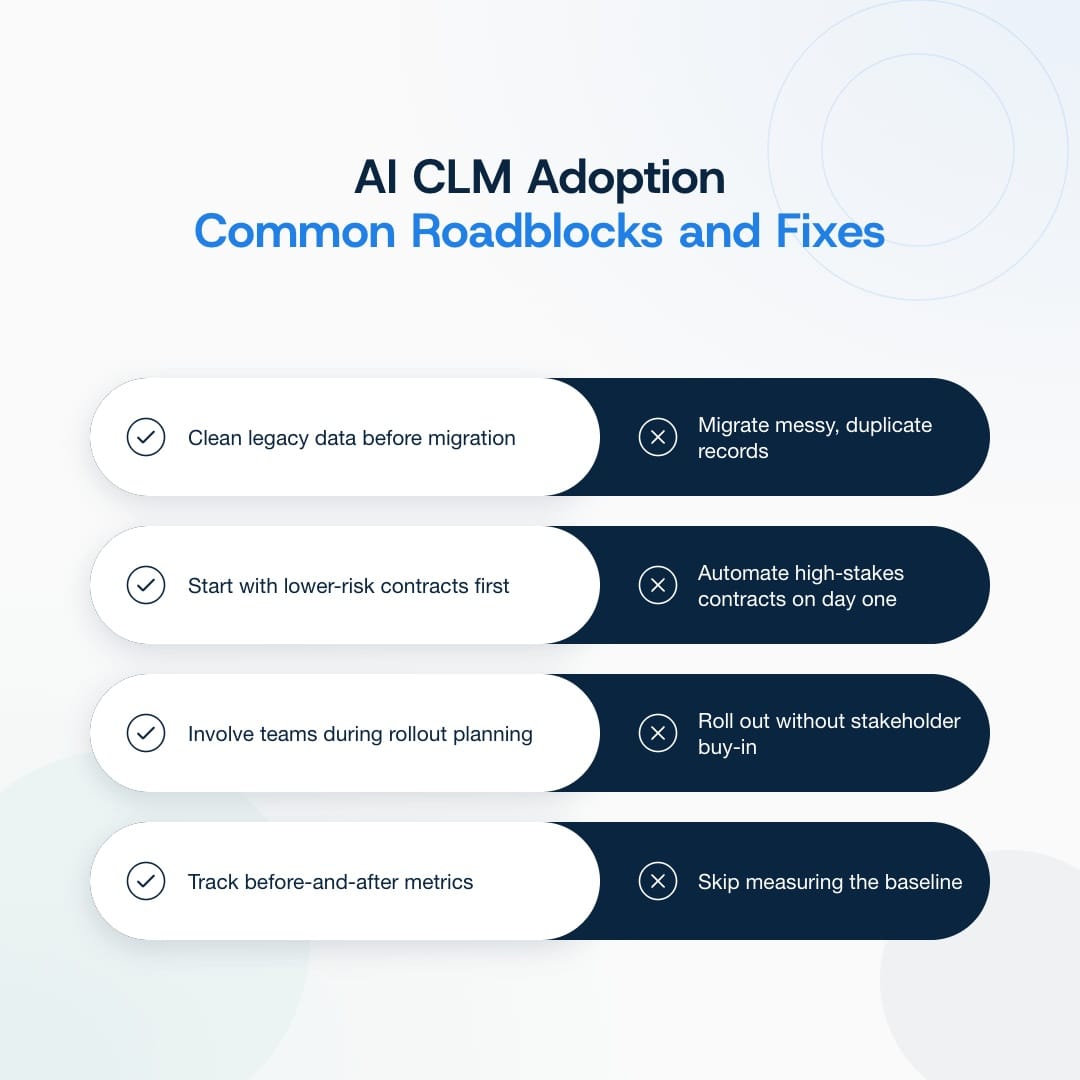
Most AI CLM rollouts stall not because of the software, but because implementation is treated as a one-time setup rather than a change in how people work.

AI CLM software isn't hard to evaluate once you know what to check: accurate clause intelligence, real ERP integration, an honest implementation plan, and data handling built for the regulatory environment you operate in.
That's the gap a proper AI CLM Handbook closes, providing legal, procurement, and finance with a shared reference rather than a vendor pitch. Provakil's Handbook and CLM platform are built around exactly that, with ERP integration and DPDP-aligned data handling as standard.

AI-powered contract lifecycle management software uses machine learning to manage contracts from drafting through renewal. It reads contract language, flags clauses that deviate from approved terms, automatically extracts obligations and key dates, and routes renewal alerts, reducing the manual review work a legal or procurement team would otherwise do by hand.
Most AI CLM platforms connect to ERP systems like SAP, Oracle, or Microsoft Dynamics, and CRM platforms like Salesforce, through APIs that sync contract data and key dates in both directions. A signed contract can update ERP billing records automatically, and a CRM opportunity can generate a contract draft without manual re-entry.
The most common challenges are messy legacy contract data that takes time to clean before migration, building enough trust in the AI's risk detection before expanding its role, and getting sales and procurement to adopt a structured intake process instead of old email habits. None of these is usually about the AI's capability itself.
It can be, but only if the platform is built for it. Look for role-based access control, encryption at rest and in transit, a full audit trail, and explicit support for DPDP-aligned consent and data handling for any contract containing personal data.
Start with a single high-volume contract type rather than the full portfolio; build the clause playbook before go-live; involve the business teams who generate contracts early in the rollout; and track concrete before-and-after metrics, such as cycle time and review hours saved, to keep the business case visible.

Dive deep into Provakil's numerous blog posts & discover how legal tech can streamline your litigation, contracts, IP, and notice management processes.